Wednesday, 14 February 2018

When Students are Better at Math than You

I’ve discovered this week that if you ever want to be humbled, coach a student for the Waterloo Math Contest. I’ve been volunteering at HSC this winter, and one niche I’ve fallen into is running prep for students who want to write the Fermat and Euclid math contests. The Fermat contest is quite challenging, but doable. The Euclid, on the other hand, sometimes seems near impossible. Questions generally fall into 7 categories:
1.     Logarithms and Exponents
2.     Functions and Equations
3.     Analytic Geometry
4.     Trigonometry
5.     Sequences and Series
6.     Circle Geometry
Although it’s not listed as a category, there is also a fair bit on combinatorics, though I suppose that that would fall in as a combination of functions and series. I have personally found having to prepare for these study sessions a great challenge to my knowledge and I would encourage anyone interested to work through some of the prep material (http://www.cemc.uwaterloo.ca/contests/euclid_eWorkshop.html) as part of their own professional development. The hardest one by far is the circle geometry, I still can’t solve some of those problems. Even given the solution, I have difficulty understanding the logic.


In doing this contest prep, not only has my understanding of math (particularly stats) sharpened, but it’s helped me know what to do when I get a student who is smarter than me. One student I help in particular is a true genius. When I give him a problem, he launches immediately into a proof and it takes all my concentration to keep up with his train of thought. Sometimes I think I catch a mistake, but often I’m wrong. It has shown me how to make mistakes as a teacher, but not let that diminish my authority in the subject. I think we sometimes place a burden on ourselves to know everything, and knowing how to cope with mistakes has been a valuable learning experience for me. I’ve also realized, even though this student is much, much smarter than me, I still know more than he does so I don’t have to feel like I have nothing to offer.

Learning Coding Using Games

Learning Coding Using Games
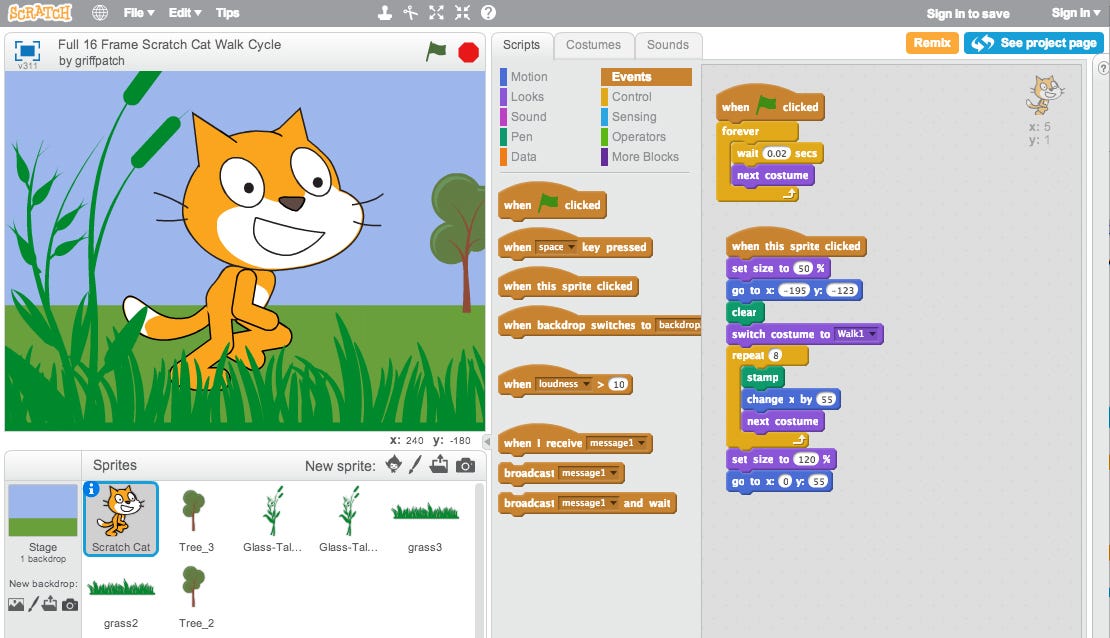
On my block, the grade 9’s would occasionally do enrichment activities where they would code using “Scratch”, a high-level programming software developed for students. I hesitate to call it a language since it doesn’t really have syntax. Rather, the coding elements are put together like lego, so there is rarely any typing involved. Even though it is really basic, you do get some ideas of loops and conditional statements, though those exact words aren’t used. My only reservation was that the activities were extremely “recipe book”. In fact, we used a recipe book, called “Coding Games in Scratch”, which gave them step-by-step instructions for completing the different challenges. As such, even someone with absolutely no idea what they were doing could make these codes. That being said, the Scratch platform had lots of other creative outlets for the students and some students in particular had way more fun that I would have guessed before we began. We were sure to include little extra bits in the challenges that weren’t in the book, in order to make them think.
For learning proper coding, there are other games out there that could be recommended for a more interested/gifted student. One of my favorites is called “Human Resource Machine”. This very funny and challenging game has you control a little office worker by pieces together a series of commands (again, like in Scratch) in order to perform a set of mundane tasks such as sorting a list of numbers. What makes this special is that the whole game is actually a perfect analogy for how computers actually work. There is also a sequel based on parallel programming coming out this year. (http://tomorrowcorporation.com/humanresourcemachine). A free online game I’ve tried that supposedly helps you learn Python is called “Code Combat” (https://codecombat.com) It is not free, but I was able to play a demo. What I like about this version is that it actually causes to type the commands, and so introduces the important of syntax. There is also autocomplete, so it isn’t arduous. I personally didn’t find it terribly fun, but that just may be because I’m already an experienced coder, and it builds so progressively that there’s no challenge or interest in the demo.


WoodenBooks


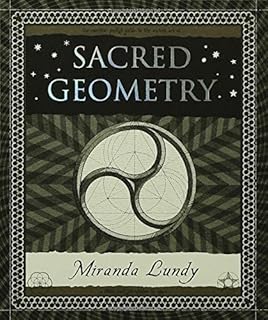
The “Wooden Books” is a series of beautifully illustrated books addressing various fields within art, mathematics, and science. I have an interest in Classical Education and first read “Quadrivium” from this series. It gave me historical and artistic information on mathematics and geometry that I made use of on my placement to enormous success in the Grade 9 geometry unit. I have also used them as supplementary material in my tutoring, again always to very positive response. Once student immediately went out and bought a set of them for herself. The information contained in these books gives not so much the utilitarian information that the curriculum is based on, but the historical-aesthetic context of the subject matter. Additionally, it generally draws upon a range of Middle Eastern and Asian sources besides those of the Middle Ages and Ancient World. The artistic material is particularly good for making geometry activities. For example, I used the chapter on tiling to easily make the following patterns on my computer from scratch. Each tile is actually made of four copies of a smaller tile, which have been rotated 0, 90, 180, or 270 degrees respectively in order to made a more complicated pattern. Of course, much more complicated patterns can be easily made from a single image with a little more planning.


Analogies for Negative Numbers

I had students (plural mind you) on my last placement that had failed grade 10 math twice and were taking it for the third time. These students were also likely to fail again. As expected, the big issue was their poor arithmetic and number sense. One student told me that 1 + 0.25 = 0.7. Another had no idea how to do addition and subtraction when negative numbers were involved, and generally wouldn’t bother to include negatives. For this post, I decided to do some reading on how other people explain negative numbers and do a little review of the ones that stuck out.

Start – Direction – Distance


This approach uses a vertical number line. They start with addition and subtraction of positive numbers. Students use the first number as where they start on the number line; whether the problem uses addition or subtraction gives the direction they will move; the second number is the distance that they will move. Once that is done, they try addition and subtraction with a negative start. Once that is comfortable, they try addition with negative numbers, and eventually subtraction with negative numbers.  I like the use of a vertical number line because I think “up –down” is easier to conceptualize that “right – left”.  The author of this approach specifically says that he avoids analogies. I appreciate that, though I think stories are sometimes easier to remember than procedures. Of course, analogies only go so far and should be used judiciously. He also makes a point of separating addition/subtraction from multiplication. As such, he never says something like “two negatives make a positive”. Personally, I think this approach sounds procedurally very useful since there is nothing arbitrary or ad hoc about it. Perhaps the deeper meaning of why it works will appear spontaneously to the students, but at the very least, they will know how to do the approach correctly.

Hot Air Balloon


I like this analogy less, the more I think about it, but I think it does have its uses. Imagine a hot air balloon. Puffs of hot air are positive numbers. Sandbags are negative numbers. Adding hot air moves you up. Subtracting hot air moves you down. Adding sandbags moves you down while removing sandbags moves you up. I won’t elaborate on how the analogy works. I think it is pretty obvious. It is certainly a cute picture and it gives a clear idea of how removing something can cause an increase. However, I’m not sure that the analogy is terrible useful for learning how to do actual calculations. I would use it as a picture for a confused student, but I would be hesitant to lead with it. One nice thing about this analogy is that there is a game that goes with it, which may be a fun activity.

White and Black Stones


This analogy is from Marian Small and I think greatly overcomplicates the matter. As a matter of honesty, I vehemently dislike almost everything I’ve seen from her, so I may have been a bit biased reading this. In her procedure, students are encouraged to represent positive integers as empty circles and negative integers and shaded circles. One positive circle will cancel with one negative circle (what she call the “zero principle”). Once all the possible cancellations are done, the student counts what is left over. The procedure works smoothly for some combinations of numbers but becomes very complicated for others. I generally don’t like Small’s reliance on cumbersome manipulatives and complicated visual metaphors. The metaphor should never be the procedure, in my opinion. It breaks down a bit when we get to multiplication where she admits that there is no easy way to model the product of two negative numbers. I will concede that her “zero principle” did grab my attention. It was an interesting way of demonstrating that zero can always be rewritten as the addition of a number and its negative, which pops up later down the road in completing the square.

Friday, 3 March 2017

Trip Planning Activity

For an (imaginary) locally developed math class, we did an interesting open-ended activity. We were given a choice between going bowling or going to a movie, and had to predict how much money we'd need for the evening. This included transportation costs, food, admission, and anything else that may apply. It was a very real application of math. There is sometimes a tension between the exactness of math and the practicality of estimation. I often think estimation and guesswork is crammed into problems where it doesn't belong, so it was nice to see a perfectly appropriate and realistic use of estimation. As the students, we were required to figure out bus fare or approximate the cost of gas. We needed to research the cost of a movie ticket and and try to anticipate what food we'd want and how much it would cost. All in all it was a very useful, dare I say fun, activity. The natural danger of course is that students will not use their phones or computers for the task at hand, and some classroom management will be needed to meet that challenge. However, if you can keep your students on task, I think if would be a very rewarding lesson for them.

Wednesday, 1 March 2017

"Deal or No Deal" Probability Game


A very fun game was played in the math class during a sample lesson on probability. We played "Deal or No Deal", based on the game show. We were divided into groups of two. In each pair, one person was the banker and the other was the contestant. We had a chart covered in cards, each of which having a dollar value on the underside of the card. The contestant picked a card at random, and the banker and contestant then haggle over how much the banker will pay for the card. During each round, the values on the remaining cards are gradually revealed, giving the contestant and banker information with which they can try and figure out how much the contestant's card might be worth. The trick is that the banker wants to buy the card for less than it's worth and the contestant wants to sell it for more than its worth. To take an extreme case, suppose all the cards have been revealed and we know that the contestant's card is either worth $1 or $500,000. If the banker offers $250,000, each player has a 1/2 chance of making or losing $250,000. Would that be a good offer from the banker? Perhaps. The interesting part of this game is that while the probability is important, there is also a lot of room for judgement. If I was the contestant, I would take the $250,000. If I was the banker, I would probably offer a lot less than $250,000 since I would rather earn $500,000 or nothing than make or lose $250,000. However, since the contestant only stands to gain, there may be a "bird in the hand" type of reasoning that would make the guarenteed $250,000 more attractive than the $500,000 or nothing. In short, there's a lot of higher-level thinking that can go into strategy for this game, and could have interesting applications in financial math and economics as well. If I ever get to teach data, it's definitely a game I would try to incorporate.